Category Archive

News

Predictive Procurement: How ML Optimizes B2B Supply Chains Before Disruption Hits

News 5 August 2025


In today’s global economy, supply chains operate under constant pressure. Between geopolitical tensions, raw material shortages, inflation, and transportation delays, traditional procurement strategies struggle to keep up. For B2B companies, these disruptions are not just logistical issues — they represent significant financial and operational risks.


This is where machine learning steps in. Far from being a buzzword, ML has started to play a transformative role in procurement, helping businesses anticipate problems before they occur, rather than reacting after the fact.


The Limits of Reactive Procurement


Most legacy procurement systems rely on historical data and static rules. This reactive model leads to inefficiencies such as delayed orders, overstocking, and cost overruns. In a fast-changing environment, these methods no longer deliver the resilience or flexibility that modern businesses demand. Reactive systems often flag risks too late. By the time a delay or price spike becomes visible, it is usually too late to act without incurring major costs.


How ML Transforms Procurement Strategy


Machine learning offers a smarter, proactive approach. Here’s how it works:


♦   Supplier risk prediction: ML models analyze supplier history, location-specific factors, and macroeconomic trends to identify vulnerabilities before they escalate.

♦   Cost forecasting: Algorithms assess fluctuating raw material prices, labor costs, and logistics fees to project more accurate budgets.

♦   Dynamic inventory planning: ML recommends optimal inventory levels by learning from real-time consumption patterns and lead times.

♦   Scenario modeling: Procurement teams simulate what-if scenarios to test how global events or internal policy changes affect supplier relationships and costs.


Instead of acting on outdated reports, decision-makers use ML-generated insights to adjust their strategies in real time.


Real-World Impact in B2B Supply Chains


Companies that implement predictive procurement see tangible benefits:


◊   Reduced supply disruptions through early warning signals

◊   Improved margins from smarter purchasing decisions

◊   Faster sourcing cycles thanks to automated recommendations

◊   More resilient vendor networks built on proactive risk management


Industries like manufacturing, electronics, pharmaceuticals, and automotive already use ML to fine-tune their supply chains. The results include better customer service levels, lower operating costs, and enhanced agility.


Conclusion: Smart Procurement Is Predictive Procurement


The future of procurement does not wait for disruptions to strike. Instead, it predicts them, prepares for them, and profits from the ability to stay ahead. ML empowers B2B companies to move from guesswork to precision, from delays to agility, and from reactive to strategic sourcing.


As the global supply chain landscape grows more complex, predictive procurement becomes more than a nice-to-have. It becomes a critical capability for resilience and growth in a volatile world.


#AI #MachineLearning #Procurement #SupplyChain #B2B #PredictiveAnalytics #ENAVC
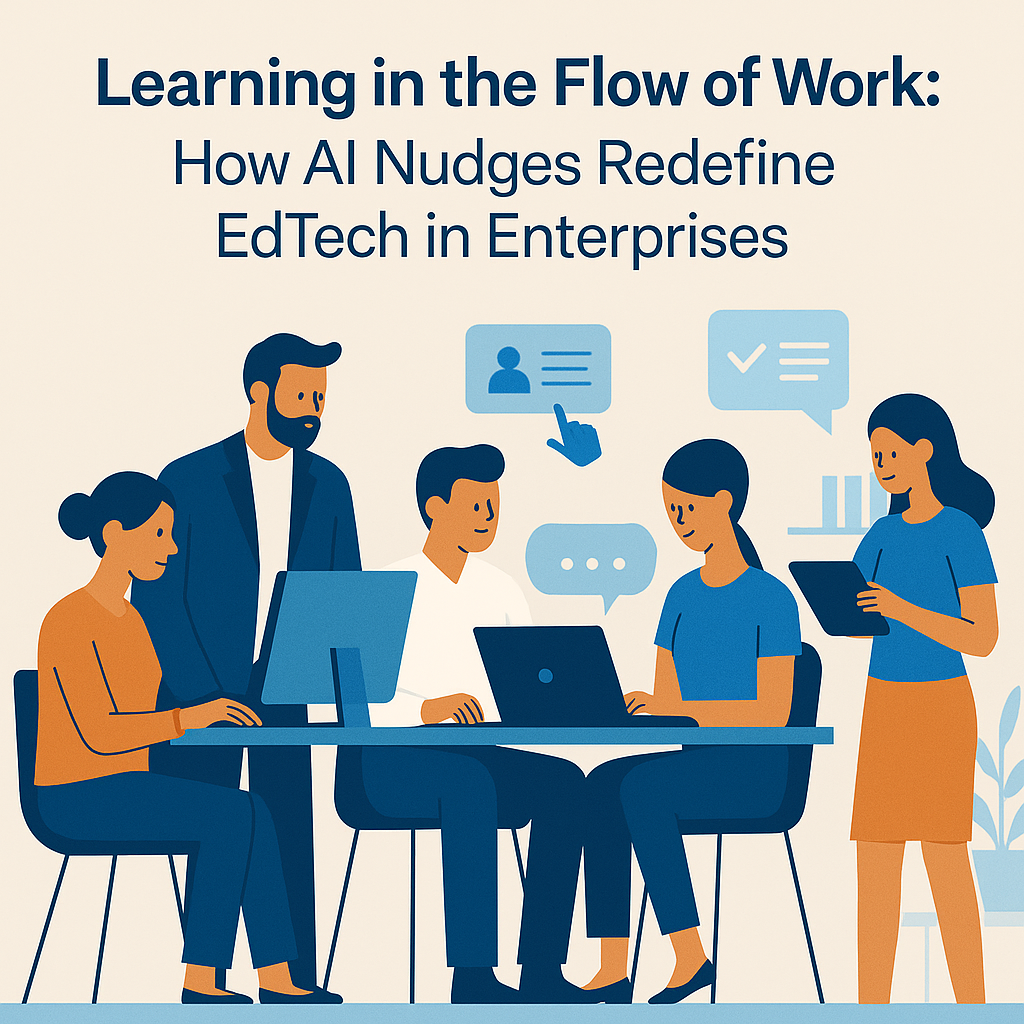
Learning in the Flow of Work: How AI Nudges Redefine EdTech in Enterprises

News 22 July 2025


In today’s fast-paced corporate landscape, learning must adapt to the rhythm of work itself. Traditional training models, which pull employees away from their responsibilities for hours or days, no longer fit the evolving demands of business. Enterprises now seek flexible, efficient, and personalized learning experiences that occur without disrupting daily workflows.


This shift gives rise to a powerful concept: learning in the flow of work. Enabled by artificial intelligence and microlearning strategies, this approach integrates bite-sized, contextual knowledge into employees’ everyday tasks. AI-powered nudges guide learners with the right content at the right time, ensuring skills development becomes a seamless part of productivity.


What Learning in the Flow of Work Really Means


Learning in the flow of work centers on delivering insights precisely when they are needed. Instead of pausing to attend formal workshops or e-learning modules, employees receive relevant tips, videos, or scenarios embedded within tools they already use. Whether in Slack, Microsoft Teams, CRM systems, or email, microlearning arrives naturally within the context of work.

AI personalizes these interactions. Based on role, past performance, and current projects, machine learning models recommend content that aligns with real-time needs. This makes learning highly relevant and instantly applicable.


The Role of AI Nudges in Corporate Learning


AI nudges take microlearning a step further. These are small, proactive prompts that encourage behaviors tied to learning goals, performance metrics, or professional growth. Nudges may suggest watching a 90-second video before a client call, recommend a short quiz to reinforce new knowledge, or highlight coaching insights from recent feedback.


What makes AI nudges effective is their timing and relevance. Unlike one-size-fits-all training reminders, AI-powered systems analyze patterns of work behavior and determine optimal learning moments. This keeps employees engaged without overwhelming them.


Key Benefits of AI-Driven Microlearning in Enterprises


 Improved Knowledge Retention: Short, spaced-out learning moments reinforce concepts more effectively than long, infrequent sessions.


♦   Increased Engagement: Learning becomes part of everyday workflow, reducing resistance and boosting adoption.


♦   Faster Skill Development: Employees upskill as they work, which accelerates learning outcomes without affecting productivity.


♦   Personalization at Scale: AI adapts learning paths for each employee based on role, context, and progression.


♦   Better Measurement: AI tools provide real-time insights into learning impact, engagement rates, and content effectiveness.


Real-World Use Cases


Global enterprises use AI-enabled learning platforms to onboard sales teams faster, upskill customer support staff, and keep technical teams aligned with evolving tools. For instance, an HR platform might nudge new managers with brief leadership tips based on recent team feedback, while a cybersecurity app might push targeted micro-lessons during high-risk activities like data access.


Conclusion: From Training to Continuous Enablement


As workplaces become more dynamic, learning must move with the pace of work. AI-powered nudges and microlearning shift training from isolated events to ongoing, contextual support. Enterprises that adopt this model do more than improve L&D efficiency — they build a culture of continuous development, agility, and innovation.

In a world where knowledge becomes outdated faster than ever, helping employees learn as they work isn’t just a benefit. It becomes a competitive necessity.


#AI #EdTech #CorporateLearning #Microlearning #FutureOfWork #Upskilling #B2B #SaaS #ENAVC

AI for ESG: Turning Compliance into Competitive Advantage

News 16 July 2025


Environmental, Social, and Governance (ESG) initiatives no longer sit on the sidelines of corporate strategy. Investors, regulators, customers, and even employees demand that companies measure, manage, and report their environmental and social impacts with real transparency. Yet many organizations still see ESG primarily as a compliance burden.

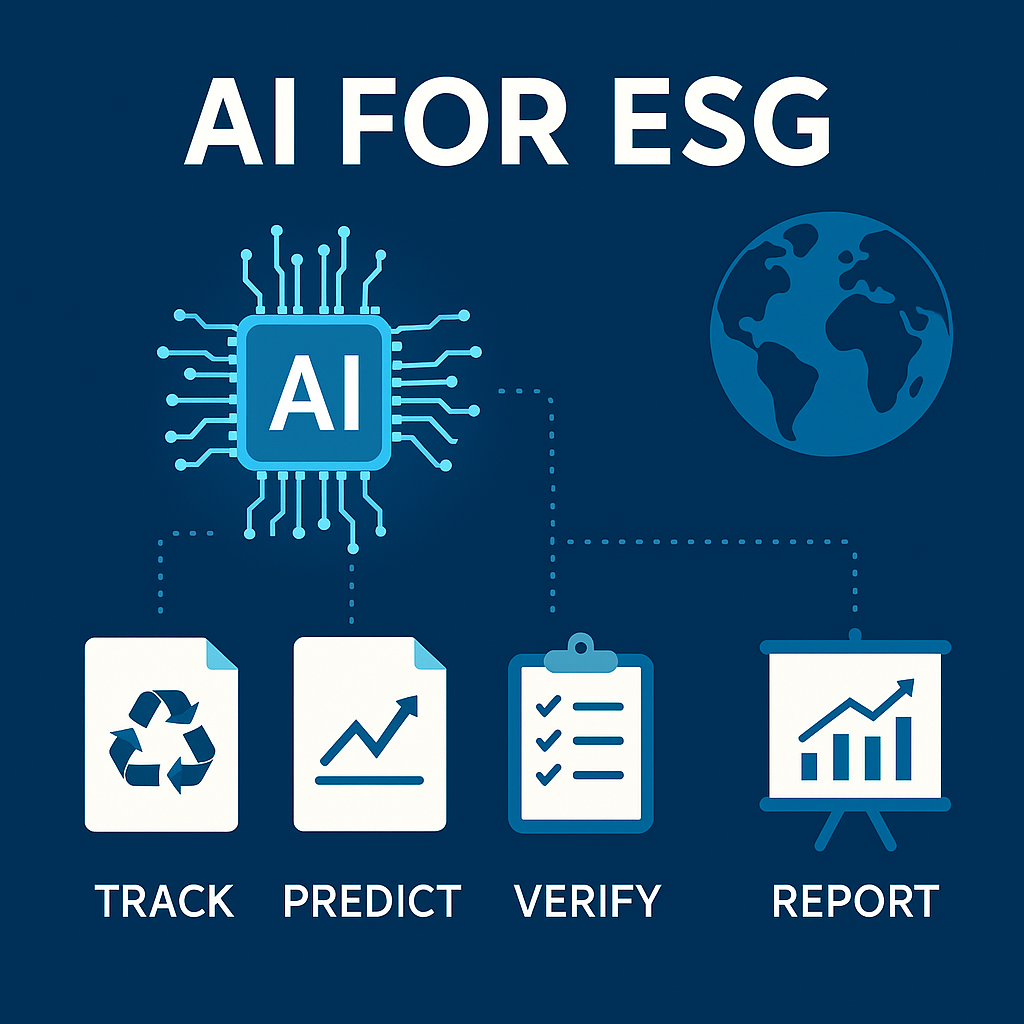
Artificial intelligence changes this perspective. By automating data gathering, improving reporting accuracy, and uncovering actionable insights, AI transforms ESG from a regulatory checkbox into a genuine competitive advantage. Companies that use AI-driven ESG strategies not only meet compliance demands more efficiently but also strengthen their brand, attract investment, and unlock operational efficiencies.


Why ESG Data Becomes So Complex


Collecting ESG data is far from straightforward. Sustainability metrics span energy use, carbon footprints, supply chain ethics, diversity statistics, health and safety records, and more. Much of this data sits in fragmented systems or with third parties. Compiling it requires significant manual effort, which leads to slow processes and higher risk of error.

AI addresses these challenges by ingesting data from multiple internal and external sources, reconciling inconsistencies, and providing a unified view of ESG performance. Machine learning algorithms detect patterns and fill in data gaps, which makes ESG tracking both faster and more reliable.


How AI Enhances ESG Strategies


1. Streamlined Data Collection and Validation


AI automates the tedious process of gathering ESG-related data from diverse systems. Natural language processing tools extract relevant details from reports and contracts, while machine learning models cross-check figures for anomalies. This approach ensures data integrity and significantly reduces the time needed for compliance preparation.


2. Advanced Predictive Analytics


AI goes beyond backward-looking reports. Predictive models analyze trends and forecast future ESG risks and opportunities. For example, a company can predict the financial impact of upcoming carbon taxes or anticipate supply chain disruptions tied to environmental events.


3. Automated ESG Reporting


Regulatory frameworks like the EU’s CSRD or the SEC’s proposed climate disclosures require rigorous reporting. AI systems compile data into compliant formats, generate audit-ready documents, and maintain clear data trails for regulators and stakeholders.


4. Improved Supplier and Partner Screening


Machine learning evaluates the ESG profiles of suppliers by analyzing publicly available records, certifications, and news sentiment. Companies can flag partners who pose sustainability or ethical risks, which protects brand reputation and supports long-term compliance.


5. Engaging Investors and Stakeholders


AI-driven dashboards transform raw ESG data into clear visual insights. This transparency strengthens investor relations and demonstrates proactive risk management. It also helps communicate sustainability commitments to customers and employees in compelling ways.


Real-World Benefits Beyond Compliance


Organizations that integrate AI into their ESG initiatives see results that extend far beyond meeting regulations.


√  Cost Reduction: Predictive maintenance and energy optimization models cut waste and lower operational expenses.


√  Risk Mitigation: Early identification of ESG risks reduces the likelihood of costly fines or reputational damage.


√  Talent Attraction: A strong ESG profile appeals to employees who prioritize purpose-driven workplaces.


√  Investor Interest: ESG-focused funds and lenders increasingly favor companies with robust, transparent metrics.


AI essentially turns ESG into a dynamic part of strategic planning, not just a reactive compliance task.


Conclusion: Moving from Obligation to Opportunity


The future of ESG belongs to companies that treat it as a core business driver. Artificial intelligence helps organizations shift ESG from a costly regulatory obligation into a source of innovation, efficiency, and market differentiation.

By leveraging AI to gather cleaner data, anticipate risks, and demonstrate real impact, businesses not only stay ahead of tightening global regulations but also build trust with stakeholders and secure a more resilient future. Those who move early position themselves as leaders in the next phase of sustainable growth. In a market where transparency and accountability increasingly influence buying and investment decisions, AI-powered ESG strategies become not just smart — they become essential.


#AI #ESG #Sustainability #RiskManagement #Investors #Fintech #B2B #Compliance #ENAVC

Zero Trust in a Multicloud World: Can Identity Become the New Perimeter?

News 10 July 2025


As businesses accelerate their digital transformations, traditional security perimeters dissolve. Data, applications, and workloads no longer reside within a single data center or cloud. They spread across multiple cloud providers, edge locations, and on-premises systems. In this fragmented environment, the old notion of securing a trusted network boundary becomes obsolete.


This is where zero trust emerges as a powerful security philosophy. Zero trust assumes that no user, device, or system should gain implicit trust simply by being inside the network. Instead, trust must be verified continuously, based on identity and context. As multicloud adoption grows, identity shifts from a simple authentication factor to the core perimeter of modern security.


Why Multicloud Demands a New Security Approach ?


Companies increasingly rely on multicloud strategies to avoid vendor lock-in, optimize workloads, and improve resilience. They run workloads across AWS, Azure, Google Cloud, and private data centers, often interconnected through APIs and hybrid platforms.


However, this architecture complicates security:


→  Each environment may use different access controls and policies.

→  Lateral movement becomes easier for attackers once they breach any single environment.

→  Traditional VPN or firewall-based models struggle to secure dynamic, distributed resources.

Zero trust addresses these challenges by enforcing granular security checks everywhere, regardless of where applications or data live.


How Zero Trust Works in Hybrid and Multicloud Contexts


Zero trust does not rely on location or network boundaries. Instead, it verifies who or what requests access, the context of that request, and whether it aligns with the security policy.


Key components include:


1. Strong Identity and Access Management (IAM)


Identity becomes the new perimeter. Zero trust frameworks depend on robust IAM systems that authenticate and authorize every user, device, and workload. This involves:


→  Multi-factor authentication (MFA)

→  Role-based or attribute-based access controls (RBAC/ABAC)

→  Continuous risk evaluation using behavioral analytics


2. Least Privilege Enforcement


Zero trust minimizes access by ensuring users and systems only receive the permissions they need. This limits the potential damage of compromised credentials or insider threats.


3. Microsegmentation


Rather than securing entire networks, zero trust breaks environments into smaller zones. Each segment enforces its own security controls, reducing attack surfaces and preventing unauthorized lateral movement.


4. Continuous Monitoring and Contextual Policies


Zero trust does not grant long-lived access. It evaluates requests based on device health, geolocation, time of day, and recent user behavior. Anomalies trigger additional verification or deny access outright.


Why Identity Becomes the Central Control Point


In multicloud environments, consistent perimeter-based security is impossible. Identity is the one element that persists across cloud platforms and applications. Whether an employee accesses a financial dashboard on AWS, a customer database on Azure, or collaboration tools hosted on a SaaS platform, verifying identity and context ensures secure access.

Identity-based security becomes even more critical with API-to-API communications and machine identities in microservices architectures. Automated workloads must authenticate and prove their legitimacy just like human users.


Benefits of Shifting to Identity-Centric Zero Trust


Organizations that build zero trust around identity achieve:


→  Stronger breach containment: Even if attackers compromise part of the network, they cannot easily escalate without additional identity proofs.

→  Improved compliance: Regulatory standards increasingly favor fine-grained, audit-ready access controls.

→  Unified security policies: Identity-centric controls apply consistently across clouds, reducing complexity and gaps.

→  Enhanced user experiences: Intelligent policies adapt access without forcing redundant logins or broad restrictions.


Conclusion: Rethinking Security in a Multicloud World


Zero trust represents more than a technical model; it is a strategic mindset that aligns with how modern businesses operate. As workloads spread across multicloud and hybrid environments, identity naturally rises to become the new perimeter.

By anchoring security policies around verified identities and contextual access decisions, organizations strengthen defenses without hindering agility. They protect data and workloads wherever they reside, maintain regulatory alignment, and build trust with customers and partners.

Zero trust is not a one-time deployment. It evolves through continuous improvement, refining how identities are verified and how access is governed. In the complex reality of multicloud, this approach ensures that security moves with the business, rather than holding it back.


#ZeroTrust #CyberSecurity #CloudSecurity #IdentityManagement #Multicloud #HybridCloud #B2B #ENAVC

Composable Fintech: Building Custom Financial Products via APIs

News 1 July 2025


Financial services no longer fit neatly into monolithic systems. As customer expectations shift toward personalized, on-demand solutions, the fintech sector evolves to meet these demands with composable architectures. Instead of offering rigid, end-to-end platforms, companies now leverage modular APIs to assemble tailored financial products that adapt to specific business and customer needs.

This approach, known as composable fintech, transforms how organizations build, deploy, and scale financial services.


What Is Composable Fintech?


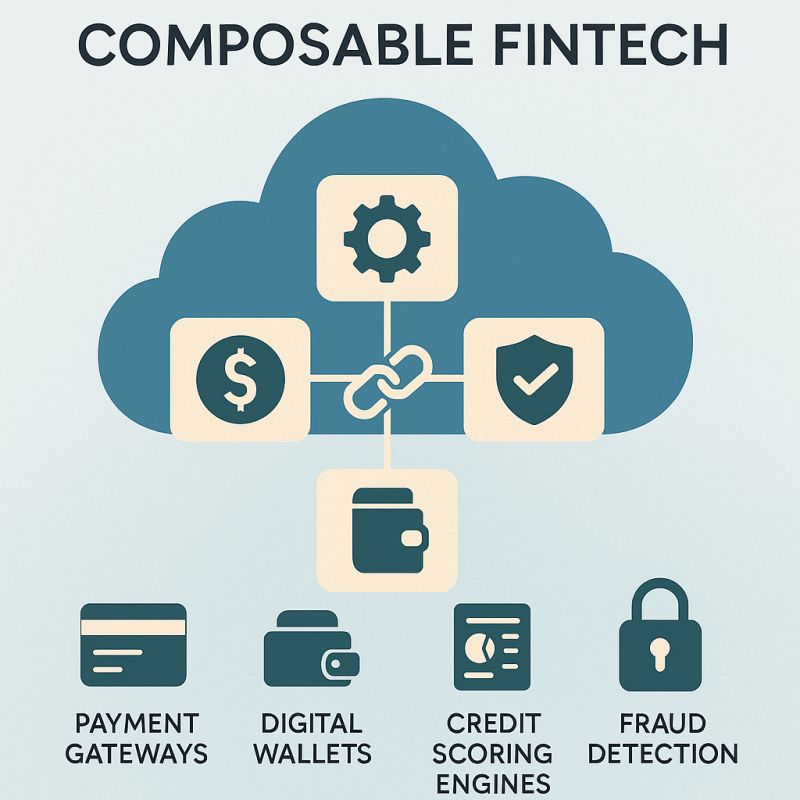
Composable fintech refers to using modular APIs and microservices to create customized financial solutions. Rather than relying on a single provider for an all-in-one banking or payment system, businesses can choose best-of-breed services for each function and combine them into a unified offering.


For example, a company might integrate:


∴  A payment gateway from one provider


∴  A fraud detection API from another


∴  A digital wallet module from a third


∴  A credit scoring service tailored for their region


This flexibility allows businesses to design financial products that match their unique requirements without building every capability from scratch.


Why Modular APIs Are Changing the Game?


APIs act as the glue that connects different financial functionalities. They allow applications to communicate in real time, sharing data and executing transactions securely. This architecture makes financial innovation faster, more cost-effective, and easier to adapt.


Key benefits include:


⊕   Speed to market: Companies launch new products or features quickly by integrating ready-made modules.


⊕   Scalability: As demand grows, businesses add or adjust services without overhauling entire systems.


⊕   Personalization: Organizations create hyper-targeted solutions by selecting only the components that serve their audience.


⊕   Risk reduction: They avoid vendor lock-in by being able to swap out underperforming modules.


Examples of Composable Fintech in Action


→  Retail and e-commerce financing: Merchants integrate buy-now-pay-later APIs alongside loyalty rewards engines and custom checkout experiences, offering customers seamless financing tailored to shopping habits.


→  Embedded insurance: Startups partner with modular insurtech APIs to embed microinsurance products directly into platforms, from travel booking sites to gig economy apps.


→  SME lending platforms: Providers combine alternative credit scoring, automated underwriting, and KYC modules to build end-to-end digital lending workflows without managing all infrastructure internally.


→  Global treasury solutions: Enterprises stitch together FX hedging APIs, multi-currency wallets, and automated compliance tools to manage cross-border operations efficiently.


Challenges to Consider


While composable fintech offers immense promise, it brings complexity in areas like:


◊  Data privacy and security: Coordinating multiple APIs requires rigorous standards to protect sensitive customer data.


◊  Regulatory compliance: Different components may be subject to varied rules across jurisdictions.


◊  Operational oversight: Businesses must ensure all third-party modules continue to meet performance and availability expectations.


Successful composable strategies depend on robust API management, clear SLAs, and strong governance.


Conclusion: A New Era of Tailored Financial Innovation


Composable fintech empowers businesses to break free from the limitations of traditional, one-size-fits-all financial products. By building solutions piece by piece, they align offerings precisely with customer demands and market opportunities.

APIs turn financial services into a flexible toolkit. Companies use this toolkit to experiment, personalize, and evolve quickly—without the weight of legacy infrastructure slowing them down. As competition intensifies and user expectations rise, those who adopt a composable mindset gain the agility to lead the next wave of financial innovation.

Composable fintech is not simply a technological shift. It represents a strategic transformation, giving organizations the ability to craft financial experiences as unique as the customers they serve.


#Fintech #Composable #APIs #B2B #FinancialInnovation #SaaS #ENAVC

Beyond SaaS: The Rise of Developer Experience Platforms (DXP)

News 23 June 2025


Software as a Service (SaaS) has long dominated the technology landscape by providing scalable, flexible solutions to businesses of all sizes. However, a new category begins to emerge, one that shifts the focus from end-users to developers themselves. This category is known as Developer Experience Platforms (DXP).

While SaaS platforms emphasize user-facing functionality, DXPs prioritize the tools, environments, and systems that enable developers to work faster, collaborate better, and build higher-quality software.


What Defines a Developer Experience Platform?


A Developer Experience Platform integrates infrastructure, automation, CI/CD pipelines, observability, testing, documentation, and collaboration into a cohesive system. It eliminates the friction developers often face when switching between tools or waiting on other teams.

Rather than forcing developers to piece together fragmented tools, a DXP provides a streamlined environment where innovation can thrive. Key features include:

♠  Pre-configured environments
♠  Integrated GitOps workflows
♠  Real-time code feedback
♠  Internal developer portals
♠  Automated infrastructure provisioning


Why Developer Experience Now?


Developer productivity becomes a top priority as companies scale their software operations. The shift toward platform engineering, microservices, and DevOps means that developers manage more complexity than ever before.

Delays, unclear documentation, scattered tooling, and handoffs across siloed teams cause frustration and reduce velocity. DXPs address this by making development work more autonomous, discoverable, and seamless.

At the enterprise level, improving developer experience not only boosts code quality but also reduces onboarding time, accelerates release cycles, and improves engineering satisfaction.


The Business Case Behind DXPs


Organizations that invest in DXPs see long-term returns. When developers gain speed and clarity, software moves from idea to deployment with fewer errors and greater agility. This has direct impact on:

∴   Time-to-market
∴   Customer satisfaction
∴   Operational costs
∴   Talent retention


In B2B software, especially, development bottlenecks often delay updates, integrations, or client implementations. DXPs help eliminate these blockers, which can serve as a competitive differentiator.


Examples of the Ecosystem


Companies like Backstage (by Spotify), Port, Humanitec, and Harness build solutions that empower internal developer platforms. These tools allow engineering teams to manage complexity while maintaining governance, visibility, and security.

Even major cloud providers begin integrating developer-focused features into their services. What used to be the realm of DevOps tools now becomes a cohesive experience layer tailored for developers.


Conclusion: From Productivity to Empowerment


The rise of DXPs signals a paradigm shift in how organizations think about software development. No longer is developer experience an afterthought or internal concern. It becomes a strategic priority, on par with customer experience.

Developer Experience Platforms empower teams to build better software, faster, by removing barriers and unifying the engineering lifecycle. As technology evolves, the companies that prioritize developer needs gain an edge not only in speed but in innovation.

The future of B2B software is not just about what you build—it is about how your teams build it.


#DeveloperExperience #DXP #SaaS #PlatformEngineering #ENAVC #B2BSoftware #DevTools #Innovation #StartupTech


Encrypted AI: Securing Machine Learning Models from Training to Inference

News 10 June 2025


Artificial intelligence holds enormous potential—but its power also brings heightened risks, particularly when it comes to sensitive data. From financial records to medical histories, the information fed into machine learning models often contains personally identifiable data. As organizations embed AI deeper into their operations, securing every step of the machine learning pipeline becomes critical.

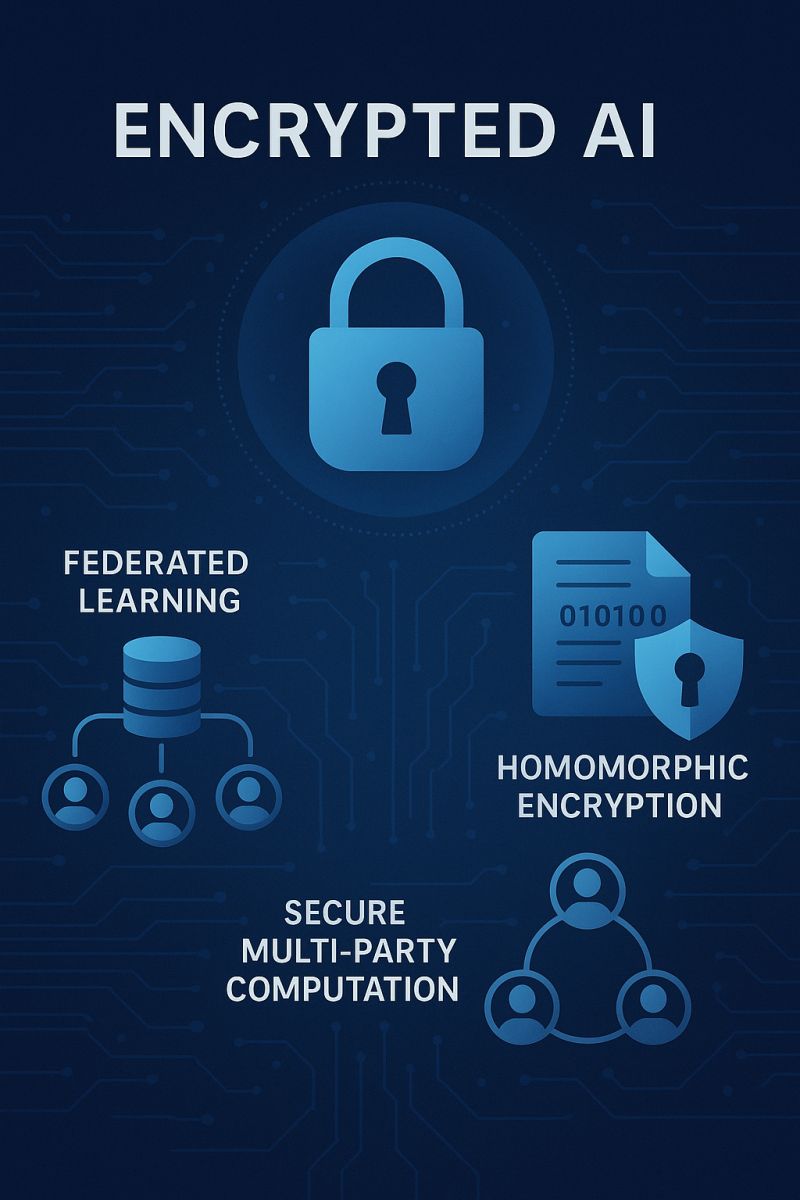
That’s where Encrypted AI comes into play: a set of technologies and practices that protect data at rest, in transit, and even during processing, without compromising performance or functionality.


Why Traditional Security Measures Fall Short in AI Pipelines


Conventional cybersecurity methods protect data before and after it is processed. However, AI systems introduce a third—and highly vulnerable—stage: during model training and inference. In traditional settings, raw data must be decrypted in memory before it can be processed by a model. This brief window creates exposure to attacks such as:


♠  Model inversion, where attackers reconstruct input data from output predictions.


♠  Membership inference, where malicious actors determine whether a specific data point was part of the training dataset.


♠  Data poisoning, which corrupts models by injecting manipulated training examples.


Encrypted AI aims to close these gaps.


Key Techniques in Encrypted AI


1. Federated Learning


Federated learning trains machine learning models across multiple decentralized devices or servers that hold local data samples, without exchanging them. The model updates—not the data—travel back to a central server, significantly reducing data exposure.

This technique becomes especially valuable in sectors like:


→  Healthcare, where patient records remain on local hospital servers.

→  Finance, where sensitive transactions do not leave the originating institution.

→  IoT networks, where edge devices like smartphones participate in training without centralizing private information.


2. Homomorphic Encryption


Homomorphic encryption allows computations to be performed on encrypted data, producing encrypted results that can be decrypted later without exposing the original input. In essence, the AI model can learn from and make decisions using data it never truly “sees.”

Although once seen as too slow for real-world use, recent breakthroughs in computation speed make this method increasingly viable for practical applications like:


⊕  Secure medical diagnosis

⊕  Encrypted cloud-based AI services

⊕  Privacy-preserving AI collaborations between companies


3. Secure Multi-Party Computation (SMPC)


SMPC enables multiple parties to collaboratively compute a function over their inputs while keeping those inputs private. This is particularly useful in joint ventures where companies want to co-train models without revealing their proprietary data to one another.


The Regulatory and Competitive Edge of Encrypted AI


Beyond the technical benefits, encrypted AI gives organizations a strategic edge. As data privacy regulations such as GDPR, HIPAA, and AI Act (EU) tighten, companies that proactively implement privacy-preserving technologies not only stay compliant but also build trust with stakeholders.

Additionally, encrypted AI protects intellectual property, such as proprietary data sources or model weights, from theft or misuse—an increasingly valuable asset in the age of AI-driven innovation.


Conclusion: Privacy by Design Is the Future of AI


Securing machine learning pipelines is no longer a technical afterthought—it becomes a foundational element of trustworthy AI. Encrypted AI represents a shift from reactive protection to privacy by design, where security is embedded into every stage of AI development and deployment.

Organizations that embrace federated learning, homomorphic encryption, and secure multi-party computation are not just minimizing risk—they are unlocking new forms of secure collaboration, opening the door to cross-sector partnerships that were once impossible due to data-sharing concerns.


As AI systems grow in scale, complexity, and societal impact, their integrity must scale with them. Building encrypted AI isn’t just about defending against attackers—it’s about respecting user rights, ensuring ethical compliance, and future-proofing your data strategy. In an AI-first world, security isn’t an add-on; it’s the backbone.


#ENAVC #EncryptedAI #FederatedLearning #AIsecurity #PrivacyByDesign #AIethics #TrustworthyAI #SmartMoney

AI Agents in the Workplace: Can Autonomous Tools Replace Middle Management?

News 4 June 2025


The workplace is evolving—and not just at the surface level. As automation matures and artificial intelligence becomes embedded in enterprise software, a new actor is taking shape within business operations: the AI agent.

These agents do more than execute predefined tasks. They observe patterns, analyze performance metrics, make decisions, initiate actions, and even interact with both humans and systems. Their rise prompts a critical question: Are we approaching a future where AI agents replace middle management?


What Makes AI Agents Different from Traditional Automation?


Unlike static bots or rule-based workflows, AI agents operate dynamically. They use machine learning models, contextual data, and autonomous decision-making to adapt in real time. They don’t just follow instructions—they interpret goals and optimize how to achieve them.


Here’s how they function in modern organizations:


♣  In sales, AI agents distribute leads based on historical win rates and team availability.

♣  In operations, they reassign tasks or reroute resources to prevent project delays.

♣  In customer support, they prioritize tickets based on urgency and sentiment analysis.

♣  In HR, they monitor engagement trends and suggest retention strategies.


These capabilities mirror—and in some cases outperform—the typical responsibilities of mid-level managers.


The Evolving Role of Middle Management


Traditionally, middle managers:

♣  Translate strategic goals into actionable plans

♣  Supervise employee performance

♣  Manage workflows and operational bottlenecks

♣  Serve as the communication bridge between upper leadership and frontline teams


AI agents now begin to assume many of these functions—especially those that involve repetitive decision-making, performance tracking, or logistics coordination. What they lack, however, is empathy, vision, negotiation skill, and the ability to build and maintain human relationships within an organization.


Collaboration Over Competition: Augmentation, Not Replacement


AI agents do not inherently threaten middle management; they augment it. They remove the burden of data sifting, performance charting, or manual routing. In return, human managers gain the freedom to focus on what matters most:

⇒  Team development

⇒  Strategic decision-making

⇒  Creative problem-solving

⇒  Cross-functional collaboration


This human-machine collaboration model leads to more agile and resilient organizations.


How Organizational Structures Begin to Shift


As AI agents assume more tactical responsibilities, companies experience a natural flattening of hierarchy. Decision loops shrink. Teams become more autonomous. Managers evolve into coaches, facilitators, and strategic architects.


Organizations that embrace AI agents often adopt:


Ξ  Agile team structures with rotating leadership

Ξ  OKR-based performance models

Ξ  Transparent AI systems with explainability features

Ξ  Cross-functional platforms for continuous optimization


Middle management transitions from command-and-control to guide-and-grow.


Conclusion: Rethinking What “Management” Means in the AI Era


The conversation isn’t about whether AI agents can replace middle management—it’s about how management itself is transforming in response to intelligent automation.


Here’s what forward-thinking companies do to prepare:


∇  Reskill mid-level leaders to interpret AI outputs, work alongside autonomous tools, and lead human teams with empathy and adaptability.

∇  Redesign workflows to incorporate AI agent decision points while preserving human oversight where nuance, ethics, or unpredictability are factors.

∇  Rethink metrics of success, not just for employees, but for AI agents—evaluating how they support organizational goals without creating new silos or blind spots.


In the coming decade, we won’t see a wholesale replacement of managers by machines. Instead, we’ll witness the emergence of hybrid leadership, where AI handles logic and scale, and humans bring insight, creativity, and connection.

The companies that succeed will not be the ones that automate the most, but those that understand what should and shouldn’t be automated—and empower their people to thrive within a smarter, faster, and more fluid workplace.


#ENAVC #FutureOfWork #AIagents #LeadershipEvolution #AutonomousTools #VCPerspective #OrganizationalDesign #AItransformation #HybridLeadership

Blockchain-Powered Microtransactions: Revolutionizing B2B Pricing Models

News 30 May 2025


In an era where digital business models evolve faster than traditional pricing structures can keep up, microtransactions emerge as a powerful tool for agility and precision. For B2B industries, which have long relied on bulk pricing and rigid contracts, this presents a major opportunity. Blockchain technology plays a key role in enabling secure, low-cost, and traceable microtransactions—reshaping how businesses structure and manage value exchange at scale.

This blog explores how blockchain revolutionizes B2B pricing through microtransaction models and unlocks new pathways for monetization, transparency, and partner collaboration.


What Are Microtransactions in a B2B Context?


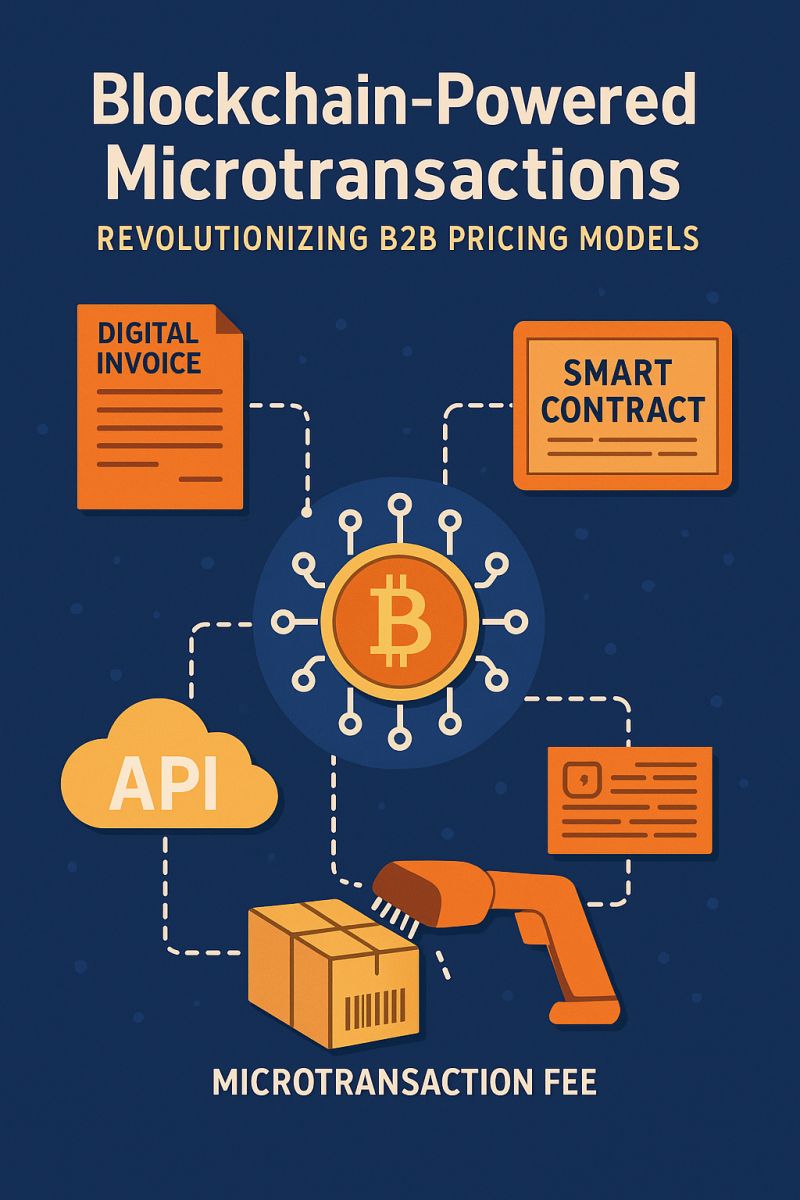
Microtransactions typically refer to small, frequent payments—often associated with consumer platforms or gaming. In the B2B world, they take on new meaning. Rather than invoicing monthly for bundled services, a B2B provider might charge clients per API call, per data query, or per user interaction. This granular pricing model requires a system that can handle countless secure, real-time transactions—with minimal overhead. That’s where blockchain comes in.


How Blockchain Powers Secure and Scalable Microtransactions


1. Immutable, Transparent Records

Every transaction on a blockchain is time-stamped, immutable, and verifiable by all parties. This transparency reduces disputes in billing and ensures clients only pay for what they use—down to the millisecond or byte.

For example, a SaaS analytics firm can charge clients per report generated or per dataset accessed, with all activity recorded on a shared ledger for auditability.


2. Smart Contracts for Automated Billing


Smart contracts execute payments automatically when pre-defined conditions are met. This eliminates the need for manual invoicing or reconciliation. Businesses no longer wait 30+ days to settle accounts; they receive instant payments tied to real usage.

A cloud provider might set up a smart contract to bill resellers for every gigabyte of data transferred through a specific region, triggered instantly as the threshold is reached.


3. Cost Efficiency for High-Frequency Transactions


Traditional payment processors charge significant fees, making small payments uneconomical. Blockchain reduces transaction costs dramatically—especially on layer 2 solutions or purpose-built blockchains optimized for speed and scale.

This unlocks monetization models that were previously impractical, such as per-request payments for AI-powered customer service bots or per-scan pricing in digital healthcare tools.


4. Global Access and Currency Flexibility


Blockchain operates globally, supports multiple tokens, and avoids many of the currency exchange fees and delays associated with cross-border banking. B2B firms serving clients in multiple countries can settle microtransactions in stablecoins or local digital currencies with ease and speed.

This makes blockchain-powered pricing particularly valuable in developing markets, where access to banking infrastructure may be limited but mobile connectivity is strong.


Industries Poised for Disruption


◊   API and SaaS Platforms: Billing users per API call or per feature unlocked.


◊   Digital Health: Charging clinics per data entry, analysis, or telehealth minute.


◊   IoT and Edge Devices: Enabling devices to autonomously transact for bandwidth, power, or data access.


◊   Logistics: Automating real-time payments for parcel scans, location updates, or customs approvals.


◊   Legal and Compliance Tech: Charging per document verified or clause analyzed via AI.


From Static Pricing to Dynamic Value Exchange


Blockchain enables B2B firms to move from flat-fee models to usage-based pricing, where clients pay in real time based on what they consume. This not only ensures fairer billing but also allows businesses to expand their customer base by offering entry-level access without large upfront commitments.

Startups, in particular, benefit from this pricing flexibility. They can tap into services previously priced out of reach, paying only as they scale.


Challenges and Considerations


Despite its benefits, blockchain-based microtransactions face several hurdles:


◊   Integration Complexity: Businesses must invest in integrating blockchain infrastructure with existing billing systems.


◊   Regulatory Uncertainty: Token-based transactions raise legal questions in some jurisdictions.


◊   Client Readiness: Not all partners are prepared to transact with digital wallets or understand smart contracts.


These concerns highlight the need for education, hybrid approaches, and collaboration with regulatory bodies as blockchain adoption in B2B pricing grows.


Conclusion


Blockchain-powered microtransactions represent more than a new way to bill clients—they offer a new language for value exchange in the digital economy. As B2B ecosystems evolve toward automation, personalization, and real-time delivery, pricing models must evolve too.

By enabling secure, transparent, and cost-efficient transactions at scale, blockchain unlocks dynamic, usage-based pricing that reflects the way modern businesses consume and deliver services. Forward-thinking companies that embrace this shift gain not only operational agility but also a competitive edge in monetizing every interaction, no matter how small.


#ENAVC #Blockchain #Microtransactions #B2BInnovation #SmartMoney #Web3 #DigitalEconomy #VentureCapital #SaaSMonetization

Cloud Gaming for B2B2C: Building Scalable Infrastructure for the Next Big Industry

News 23 May 2025


Cloud gaming marks a significant shift in how games are delivered, consumed, and monetized—and it’s not just a consumer phenomenon. For B2B2C companies, it opens up entirely new revenue models and ecosystem partnerships. By removing the need for high-end local hardware and enabling access via almost any internet-connected device, cloud gaming transforms the user experience and redefines scalability across the gaming value chain.

This blog explores how cloud computing powers the future of gaming and how B2B2C players—including game studios, telecom providers, infrastructure vendors, and platform operators—build scalable infrastructures to seize this growing market.


What Is Cloud Gaming, and Why Does It Matter?


Cloud gaming allows users to stream video games directly from remote servers rather than downloading or installing them locally. Much like Netflix for interactive content, this model significantly lowers the barrier to entry for end users. But beneath this smooth user experience lies a highly complex infrastructure—one that demands ultra-low latency, immense computing power, and seamless content delivery.

For B2B2C stakeholders, cloud gaming represents a convergence of cloud computing, network innovation, and digital entertainment, opening doors for collaborative monetization models, white-label gaming services, and new layers of user engagement.


How Cloud Computing Powers Scalable Gaming Platforms


1. On-Demand Compute and Storage Resources


Gaming companies require massive computational power to render complex 3D environments and handle real-time multiplayer interactions. Cloud infrastructure providers offer dynamic scaling, allowing platforms to handle fluctuating user demand across regions. For instance, during a game launch or seasonal event, cloud systems automatically scale resources to prevent lag or downtime—without upfront investment in physical hardware.


2. Global Content Delivery Networks (CDNs)


Cloud platforms leverage CDNs to minimize latency by bringing content closer to users. These networks distribute gaming data across global nodes, ensuring smooth gameplay even in remote or bandwidth-limited locations. This infrastructure is especially important in B2B2C contexts where telecom providers or device manufacturers bundle cloud gaming services with internet plans or smart TVs.


3. Real-Time Analytics and AI Optimization


Cloud systems collect and process real-time data on user behavior, server performance, and in-game interactions. AI models optimize the gaming experience by adjusting resource allocation, predicting bottlenecks, and even personalizing content recommendations. For platform operators, this data drives decisions on content licensing, partnership development, and customer segmentation.


4. Multi-Tenant Architecture for B2B2C Models


B2B2C cloud gaming platforms often serve multiple end-user brands or resellers. Cloud-native architectures support this by offering secure, isolated environments for each partner while centralizing management, analytics, and billing. This enables telecom companies, smart TV manufacturers, and game publishers to co-create value without managing infrastructure complexity.


New Opportunities for B2B2C Stakeholders


• Telecom Operators


By bundling cloud gaming with high-speed internet packages, telecom companies differentiate themselves in competitive markets. Partnerships with cloud platforms allow them to deliver premium gaming services without building their own infrastructure.


• OEMs and Device Manufacturers


Smartphone, laptop, and TV manufacturers integrate cloud gaming directly into their ecosystems. With embedded apps and branded gaming hubs, they offer immersive experiences that build user loyalty and increase device stickiness.


• Game Publishers and Studios


Indie and AAA developers use cloud gaming to reach broader audiences, especially in emerging markets where users may lack gaming consoles or powerful PCs. B2B2C partnerships help them monetize globally without traditional distribution limitations.


• Retailers and E-commerce Platforms


Retailers bundle cloud gaming subscriptions with physical products or loyalty programs, turning digital entertainment into a new channel for customer engagement and retention.


Challenges to Address


Despite its promise, B2B2C cloud gaming faces technical and business challenges:


♦  Latency Sensitivity: Fast-paced games require near-instant response times, making infrastructure design and geographic reach critical.


♦  Data Sovereignty: Hosting gameplay data in global clouds must comply with regional data protection laws.


♦  Bandwidth Requirements: Users need stable high-speed connections—an issue in markets with limited internet infrastructure.


♦  Licensing Complexity: Content licensing across multiple layers of partners adds operational overhead.


Solving these challenges demands ongoing investment, coordination across stakeholders, and continuous innovation in edge computing and 5G deployment.


The Road Ahead


The future of cloud gaming lies in modular, scalable ecosystems where cloud infrastructure, software, and distribution are tightly integrated. Innovations such as edge computing, 6G development, and real-time ray tracing will push the boundaries of what’s possible.

As AI continues to evolve, B2B2C platforms will offer hyper-personalized gaming experiences, tailored content bundles, and dynamic pricing models—all delivered through a frictionless cloud interface.


Conclusion


Cloud gaming is more than a trend—it is the foundation of a new digital entertainment economy. For B2B2C companies, the opportunity lies in building the infrastructure, partnerships, and experiences that power this transformation.

By leveraging cloud computing, businesses in telecom, hardware, gaming, and retail can reimagine their roles, monetize engagement in new ways, and deliver next-gen gaming experiences to a global audience—scalably, seamlessly, and sustainably.


#ENAVC #CloudGaming #B2B2C #GamingInfrastructure #SmartMoney #Innovation #Scalability #EdgeComputing